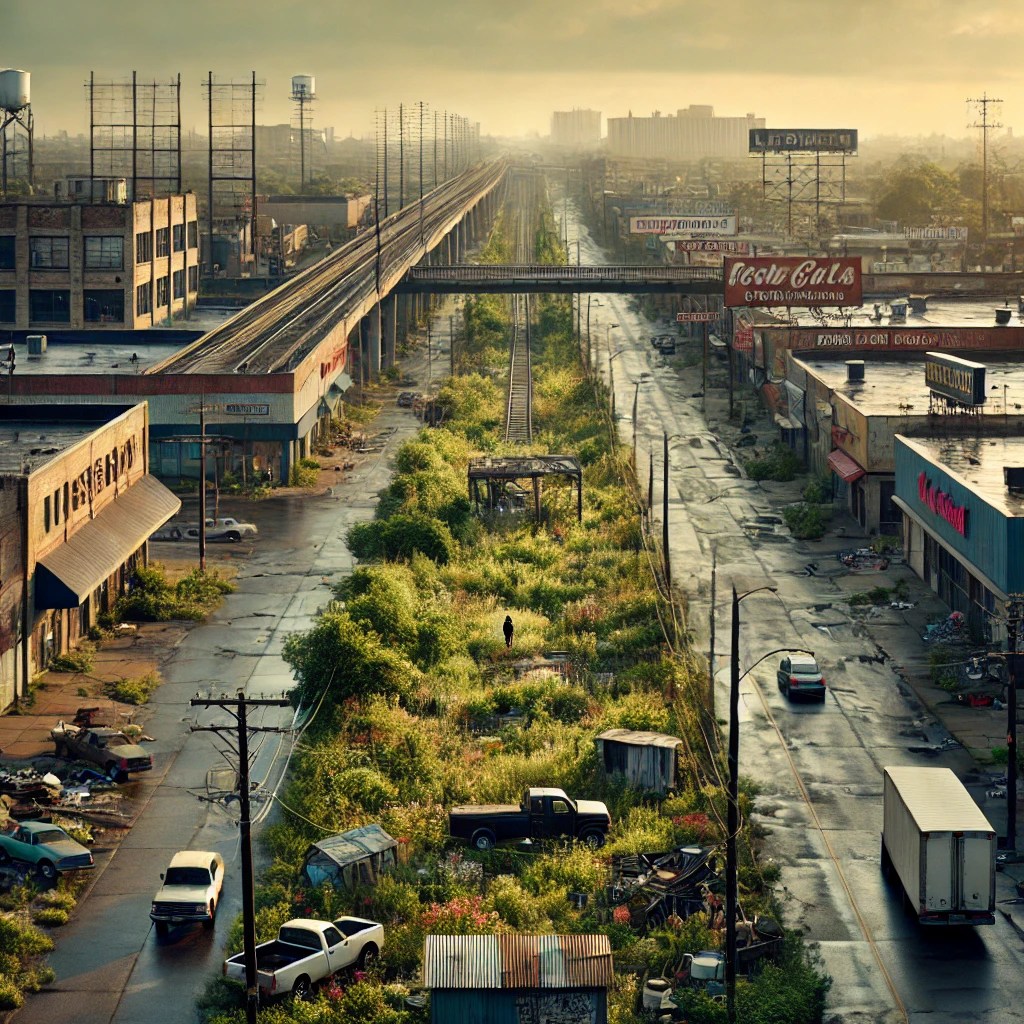
It’s been a few years since I last visited France. I lived there for a time long ago and have visited often since, though not much recently. France remains vivid in my memory, helped by the extensive collection of photos I gathered during my time there. But it’s not the memories or the photos that prompted me to write today. Instead, it’s a concept I learned while living there: la France moche (ugly France) and its influence on my photography. I became acutely aware of the beauty inherent in the “ugly” world that surrounds us daily. Let me explain.
Most of us do not live in a fancy apartment off the Champs-Élysées with access to the beauty and splendor most associate with France. No, most of us live in ordinary housing tracts or apartments, surrounded by urban sprawl, parking lots, shops, and malls. Or, in my case, strip malls that stretch for miles in every direction, highways, industrial buildings, and homeless encampments. The only beauty I see is when someone deliberately breaks the mold to create something new and fresh. I see my neighbors attempting this each spring with flowers, or my city planting trees and upgrading tired old infrastructure. This year, my city even built a new park. It’s not particularly beautiful, but it’s not ugly either.
“To me, photography is an art of observation. It’s about finding something interesting in an ordinary place. I’ve found it has little to do with the things you see and everything to do with the way you see them.”
– Elliott Erwitt
Twenty years ago, I started a photography project I called Carson Ugly. In retrospect, I should have named it Ugly Carson to align with la France moche. I consider it a missed opportunity, but one I can correct in future references. So, Carson Ugly is now Ugly Carson, and I can move on.
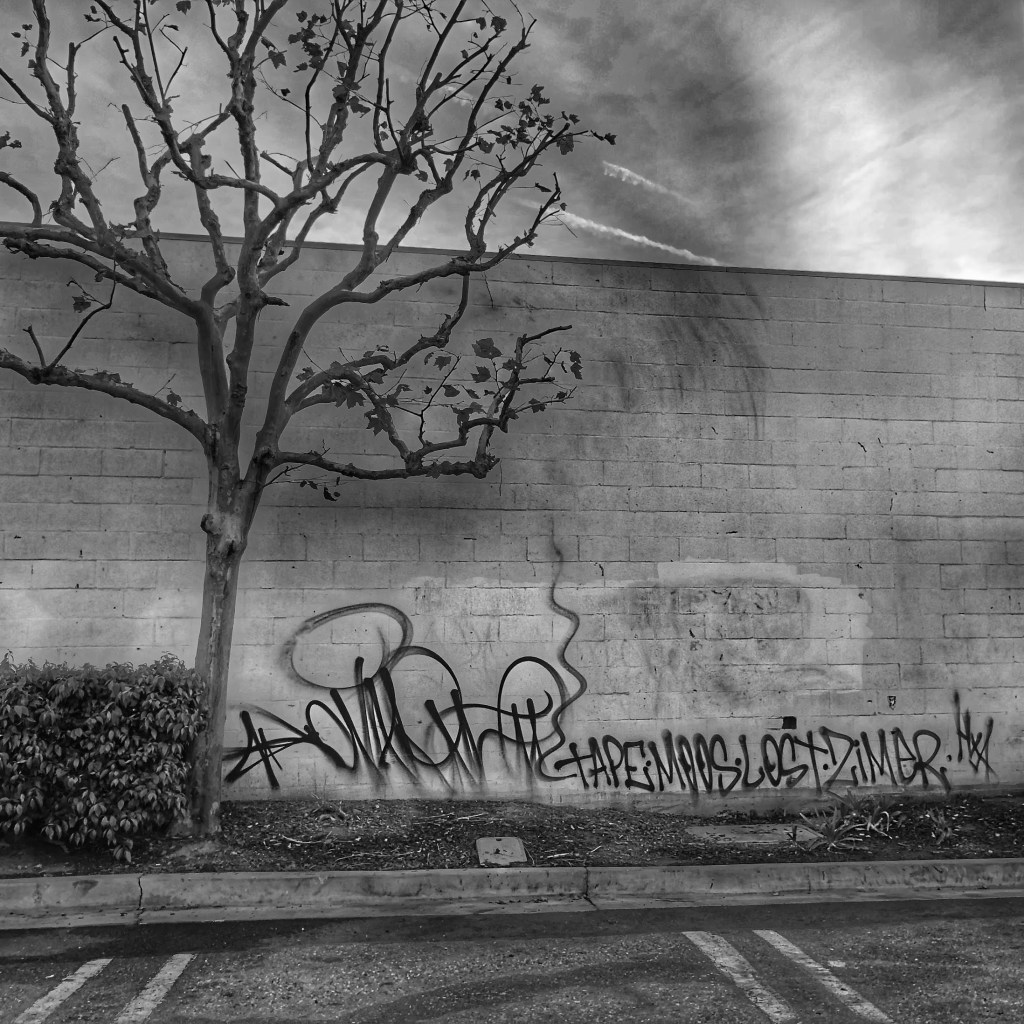
Ugly Carson grew out of the ugliness that characterized the City of Carson in the early 2000s. I worked there and drove through most of the city daily. It was ugly in a way that epitomizes urban sprawl and a lack of attention to detail. Carson didn’t seem to care enough to try to look like anything other than a mishmash of everything possible crammed into as little space as possible. You could step outside your front door and see just about anything within a few hundred yards. The ugliness was inescapable, and I felt compelled to capture it as part of a small art project. I didn’t realize it would become an obsession.
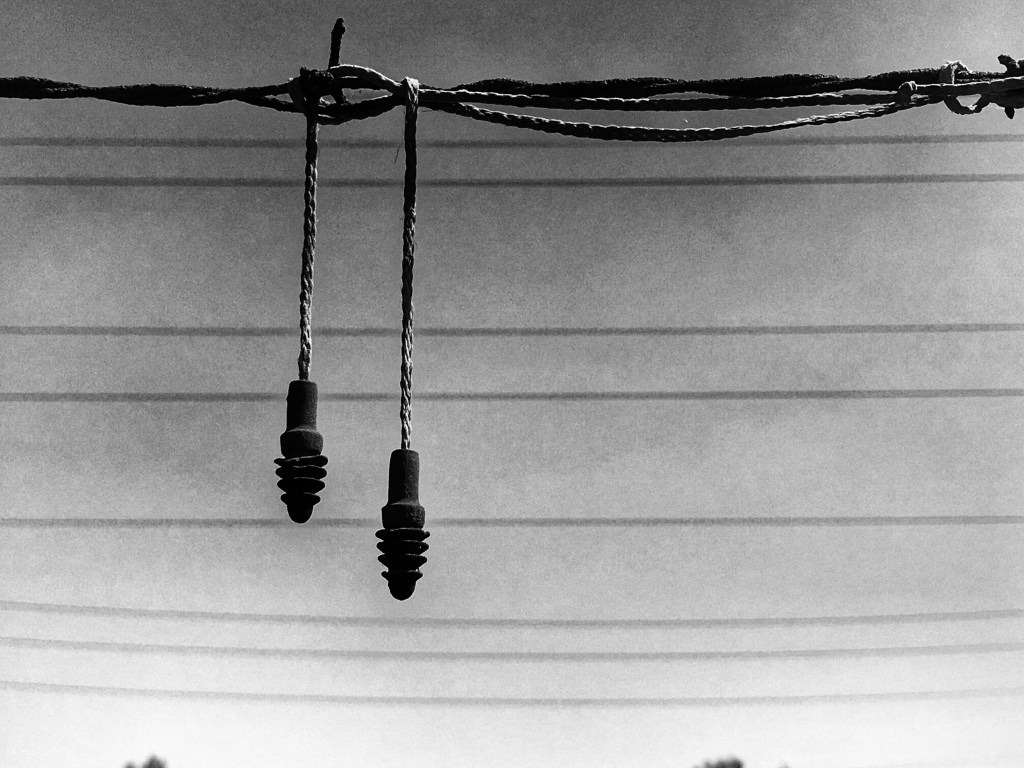
Two decades later, I’ve come to appreciate that ugliness as a kind of beauty. I don’t shoot Ugly Carson anymore, partly because I don’t travel to Carson much, but also because ugliness surrounds us unless it’s been deliberately designed out—like in cities such as Cerritos, where a combination of walls, landscaping, and public art hides the neighborhoods from those passing through.
“There is no such thing as ugly. Only seeing and unseeing.”
– Clyde Butcher
Buena Park, however, is not Cerritos. I live in a pass-through city, where the roads are wide and straight, with high-speed limits. People are meant to drive through our city and stop at one of the many strip malls or tourist attractions. Most of the city is urban and unattractive. If I were to start another ugly project, I wouldn’t need to go farther than the nearest intersection. Just yesterday, I missed an opportunity to capture an in-your-face Christian street preacher spreading his amplified version of love to anyone who drove past.
Inspiration abounds. I remember walking the streets of Paris with an early digital camera, searching for the bits of life that added context to my time there. The joy and inspiration from that time persist to this day. Ugly can be beautiful—or at least interesting. Beauty, after all, can be boring.





 Peanuts In My Pocket
Leave a comment