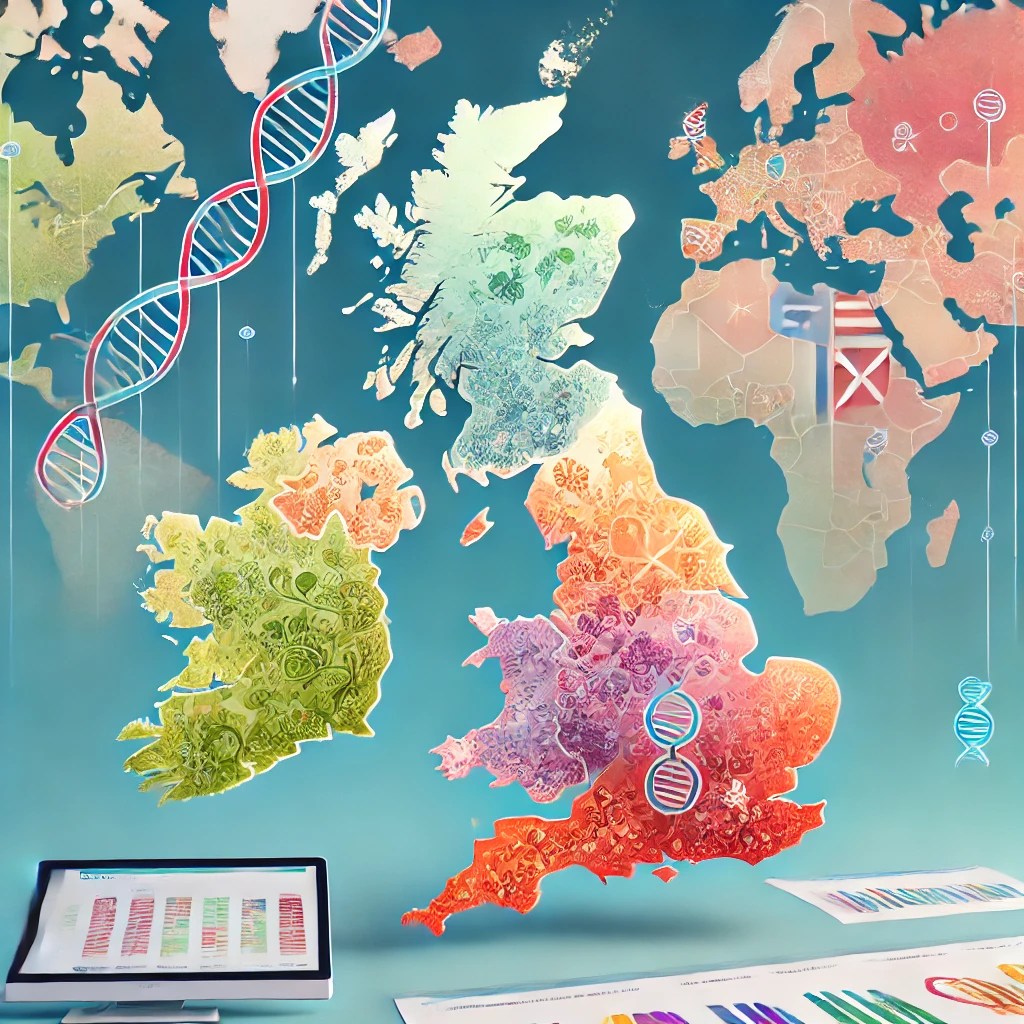
AncestryDNA updated its DNA estimates this week, and I’ve noticed some interesting changes. Previously, my heritage was primarily English, Irish, and Scottish. Now, I’m more English (37%), a bit less Irish (34%), and more Scottish (34%). Ancestry also introduced subregions, which break down larger regions like Scotland into smaller, more specific areas. My Scottish ancestry, for example, traces back to the Northern Isles. On the English side, I’m linked to the Channel Islands of Guernsey and Jersey.
I don’t know much about either the Northern Isles or the Channel Islands, but I’m eager to learn more.
“I find myself out here, exposed, with all the elements in front of me, the Atlantic stretching westwards until America.” – Amy Liptrot
For the first time, AncestryDNA also released a significant update for people of African descent, mapping 64 new ethnic groups across the continent. While I don’t have any African ancestry in my family tree, I understand this is a major breakthrough. It’s exciting to see where advancements like this will lead.
Along with the updated DNA estimates, Ancestry has redesigned its website. “Ethnicity Estimates” has been rebranded as “Origins,” and subregions have been added to give users more specific insights. The website now has a fresh look, and I spent a fun hour exploring its new capabilities.
This update has given me a clearer understanding of my family heritage by parent. The most surprising revelation is that my paternal line has no Irish ancestry, contrary to what I’ve always believed. I had thought the Masterson family originated in Ireland, but the data now suggests my father’s side is rooted in Scotland, England, and Northwestern Europe. This aligns with some of the historical research I’ve gathered so far.
Although I’m still piecing things together, having ancestors from the Northern Isles raises the possibility of Nordic roots. Could I be related to Viking adventurers? I haven’t yet expanded my ancestral research into Europe since it’s quite costly, and I still have plenty of work to do on my U.S. ancestors.
The Channel Islands, on the other hand, are more familiar to me, though most of what I know comes from fictional depictions on the BBC, along with some history about life there during World War II. I’m looking forward to learning more about these islands and their significance in my ancestry. One of my favorite ways to discover new places is by reading biographies, journals, and travelogues.
For the Northern Isles, I’ve chosen “Between Weathers: Travels in 21st Century Shetland” by Ron McMillan (2008) to start my journey. I’m still searching for a good book on the Channel Islands—if anyone has recommendations, please share them in the comments below!


 Peanuts In My Pocket
Leave a comment