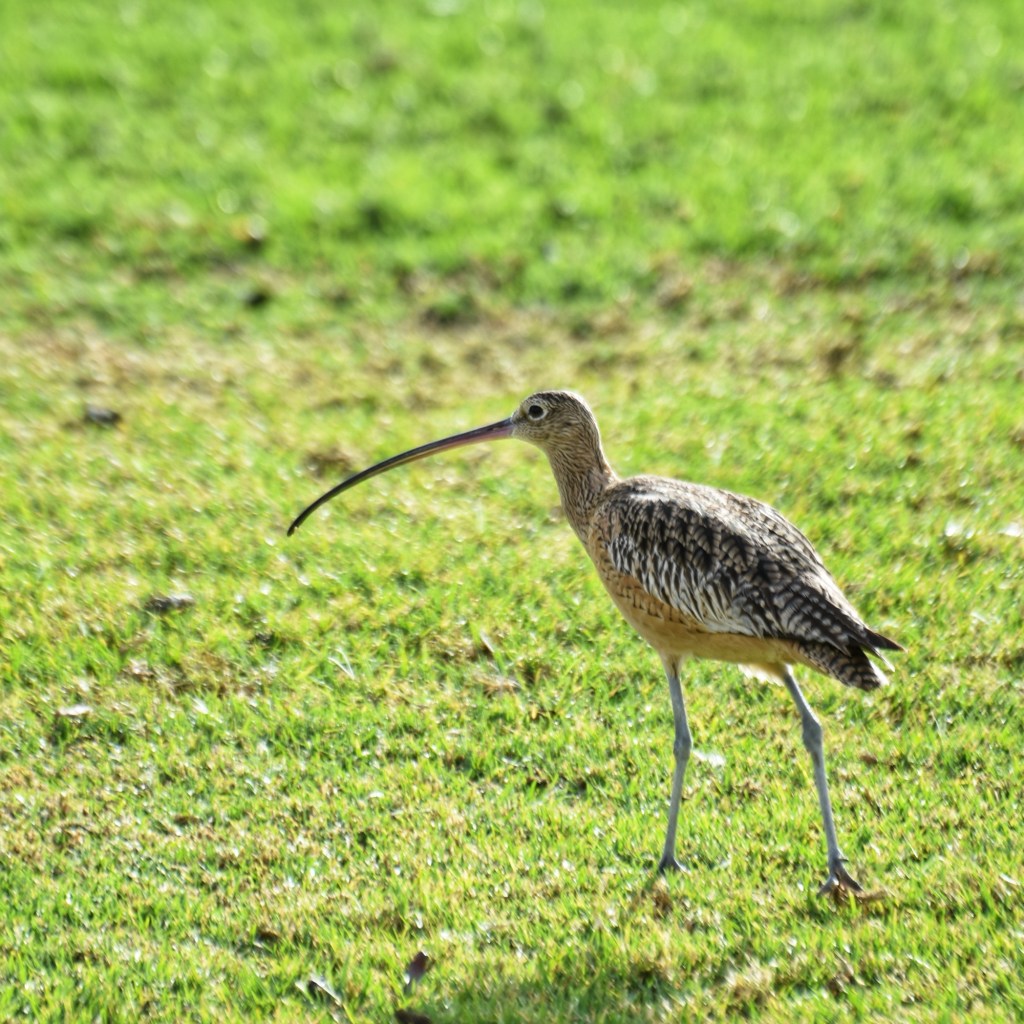
The long-billed curlew is the bird that sparked my lifelong love of birding. When I was about 10 years old, I’d often see these large, long-billed birds strolling through the grass after a rainstorm. Intrigued, I asked anyone who would listen what kind of bird they were, but nobody had a clue.
It wasn’t like today, where a simple app can help you identify a bird in moments. Back in the late ’60s, the tools for discovery were far more limited. Your options were a family encyclopedia, the local library, or, if you were fortunate, a quirky birdwatching relative. I wasn’t so lucky—my uncle was cool, but more in a firefighter/athlete way than a naturalist. With no help at home, I turned to the library, as our family encyclopedia was a budget edition focused more on historical figures than on natural history.
My local library branch was tucked into a strip mall at the edge of my neighborhood. Though it felt far away to a kid, once I discovered its location, I started riding my bike there regularly. I’d spend hours in the stacks, searching for information to identify my mystery bird. One of the librarians introduced me to field guides, though she wouldn’t let me check them out. Eventually, I saved enough money to buy one of my own.
That first field guide revealed that the long-billed curlew (Numenius americanus) is a migratory bird. These birds breed in the grasslands of the central and western United States and southern Canada during spring and summer. After the breeding season, they head south to their wintering grounds, which include the southern United States, Mexico, and Central America.
In Southern California, where I first saw them, curlews are winter visitors. They frequent wetlands, mudflats, estuaries, and coastal beaches, feeding on invertebrates and small aquatic organisms. By spring, they migrate north and inland to their breeding habitats—open grasslands, prairies, and even agricultural fields. These areas provide the perfect environment for nesting and raising their young.
That first guide didn’t just unlock the world of bird identification; it opened up the mysteries of libraries themselves. I was hooked. Before long, I had created my own bird card catalog, cross-referencing information to build a personal library of knowledge. It was my first foray into organizing and documenting the world around me—a precursor to hypercard stacks and, later, modern applications like Obsidian that fuel my passion for personal knowledge management (PKM).
In many ways, my personality was shaped by the long-billed curlew, the library that gave me access to learning, and my deep desire to catalog and document everything in my life.




 Peanuts In My Pocket
Leave a comment