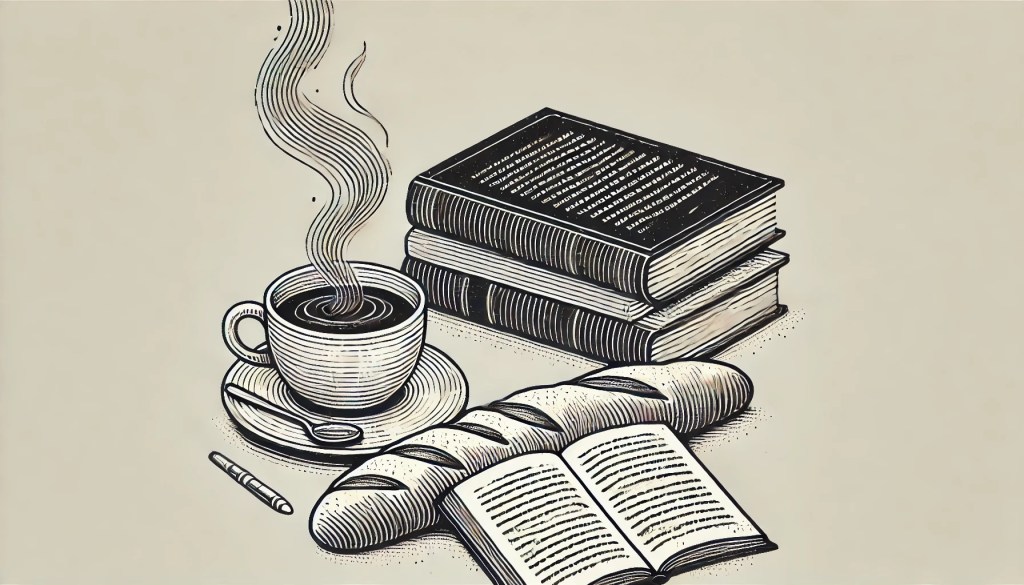
I love poetry, but it didn’t come easily to me. In my youth, I didn’t “get” it. My early experiences with poetry were often paired with a teacher urging me to explain how I felt about a poem or, worse, encouraging me to write my own. Much like drawing, I felt I lacked the creative skill required, so I avoided poetry for most of my life.
That changed in the late 90s. I was living apart from my family on a job assignment in a small city in France. With the better part of a year spent alone, I had plenty of time to myself. As I explored Paris and other cities, I stumbled upon bookstores that occasionally carried English-language titles. Most of the time, though, I struggled to read in French, relying on a dictionary and the occasional help of a kind local.
Poetry as a Gateway
I drifted toward poetry because translating a poem felt less daunting than tackling a short story or a full novel. Somewhere along the way, I developed a deeper appreciation for the art form. A visit to the world-famous Shakespeare and Company bookstore in Paris sealed the deal. I selected a few English-language poetry titles, and the rest is history. Since then, poetry has become part of my daily life.
If tools like ChatGPT had been around back then, my journey into poetry would have been far easier. Even now, I still challenge myself with French poetry. Late last year, I read Despite by Déborah Heissler, struggling through her work in its original French even though I had English translations available. This time, I used ChatGPT to help me translate and better understand the imagery.
Exploring Déborah Heissler’s Despite
One of my favorite passages from Despite reads:
Despite the heart-wrenching news I told myself,
In spring you must believe.
You no longer know if it’s tears or rain
Pouring down the window panes.
How ChatGPT Helps
ChatGPT has been a valuable tool for understanding difficult imagery. Take this passage, for example:
The lines convey a profound interplay between external circumstances and internal emotions:
- “Despite the heart-wrenching news I told myself, / In spring you must believe.”
Here, the speaker acknowledges distressing news but urges themselves to hold onto hope, symbolized by “spring,” a season traditionally associated with renewal and rebirth. - “You no longer know if it’s tears or rain / Pouring down the window panes.”
This blurring of tears and rain reflects the speaker’s deep emotional connection to their environment. The indistinguishability between personal sorrow and the external world emphasizes feelings of sadness and confusion.
Together, these lines paint a picture of a struggle to remain hopeful amidst adversity, blending the internal and external worlds in a way that highlights how grief and the surrounding world are often intertwined.
Why AI Matters for Poetry Lovers
This is just one example, but I think it proves my point: when I encounter poetry that challenges me, I now have a powerful resource to turn to. Without tools like ChatGPT, I’d have few other options. Poetry isn’t popular enough for there to be widespread resources. Let’s face it—there’s no hotline for understanding complex metaphors, and most of my friends aren’t well-versed in modern French poetry.
Sure, I could consult a coffeeshop hipster, but instead, I rely on Wally (my AI assistant). Wally doesn’t judge, roll his eyes, or make me feel inadequate. He simply answers the call.



 Peanuts In My Pocket
Leave a comment