
When I started birding a year ago, I figured woodpeckers and owls would be hard to find. I had never seen either before, so it made sense. I was partially right. Owls are hard to find. Other than hearing one a few times, I haven’t actually seen one. And if I don’t see it, it doesn’t count, and I definitely can’t take a photo.
Woodpeckers, on the other hand, are easier. With the help of my wife, who also acts as my spotter, I’ve now seen and photographed four different species.
Acorn Woodpecker
These active birds can be found in large numbers at Irvine Regional Park. Before I knew this, I spotted one, managed an okay identification photo, and felt pretty excited. Woodpeckers felt exotic. On a later visit to the same park, I saw a few more. Eventually, I saw hundreds in one day. They roost in large colonies, and their calls are distinctive and loud. Visiting them is a little like walking past the howler monkeys at the Los Angeles Zoo.
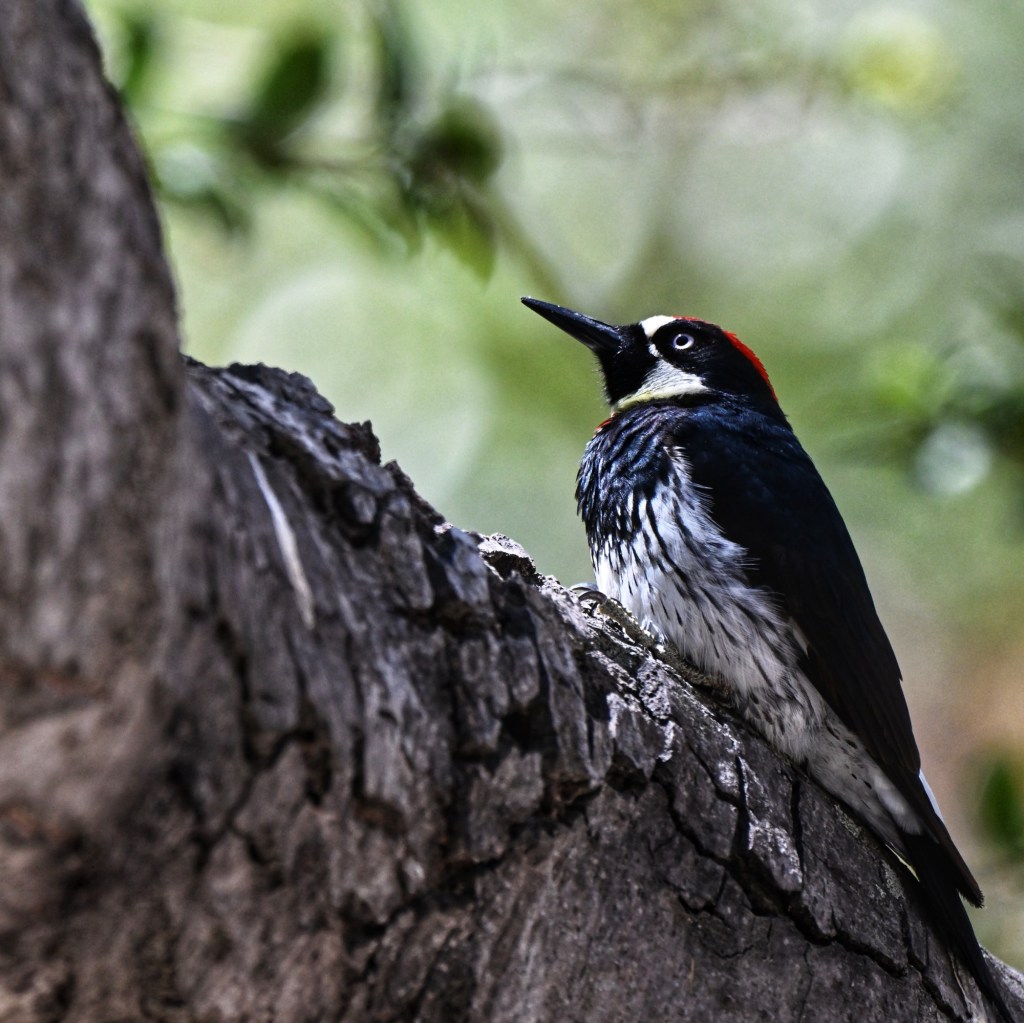
Acorn Woodpecker (Melanerpes formicivorus) – These social and noisy birds live in open oak or mixed woods. They gather, store, and eat acorns.
Nuttall’s Woodpecker
I’ve only seen one of these. It was during a long walk around the lake at Huntington Central Park. I snapped five quick shots and managed to get one that was ID-worthy. I’d love to find more, but like owls, I often hear them in the canopy and never actually see them.
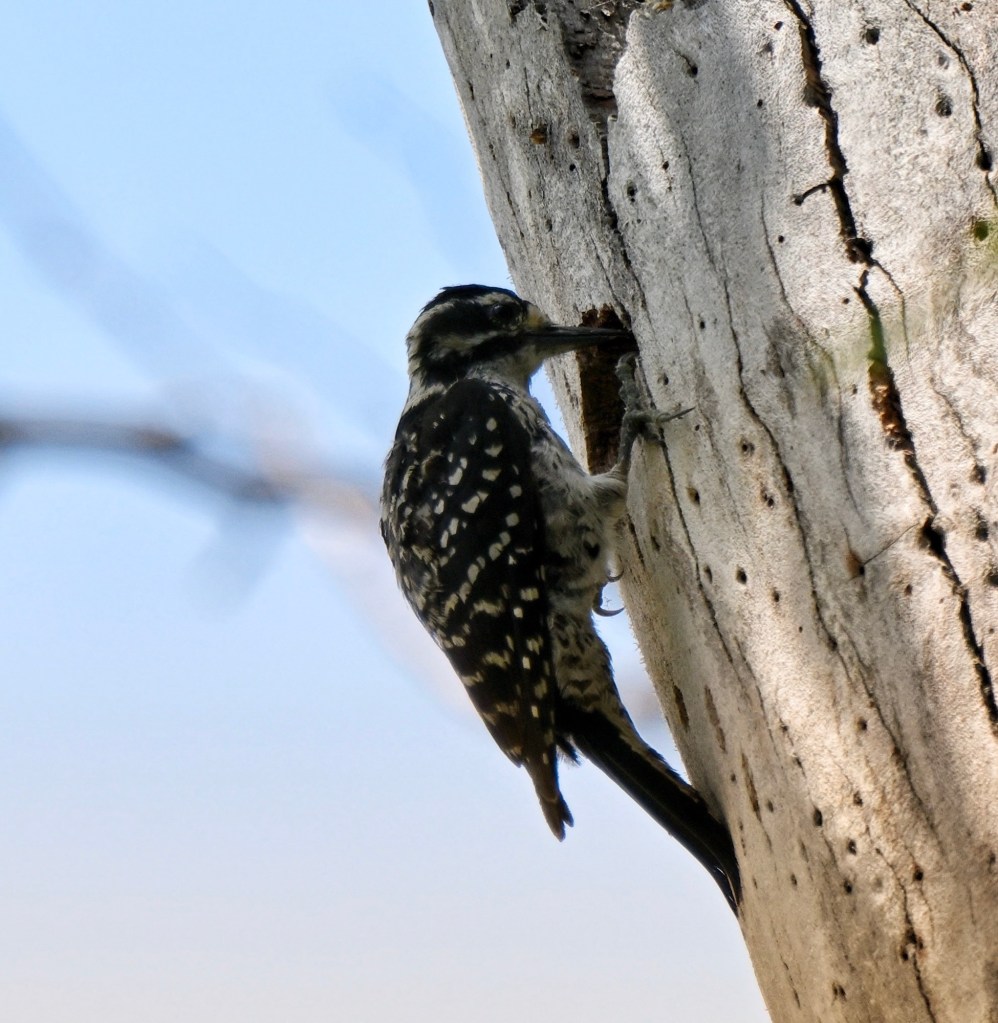
Nuttall’s Woodpecker (Picoides nuttallii) – These elusive birds live in oak savanna and riparian areas, often in urban parks where creeks or lakes are lined with willows or cottonwoods. They feed on insects and larvae.
Gila Woodpecker
I’ve seen two of these, or possibly the same one twice. We were visiting the Sonoran Desert Museum in Tucson when I heard the call. My sharp-eyed wife spotted the bird in the distance, outside the zoo grounds. I managed to capture a solid ID photo.
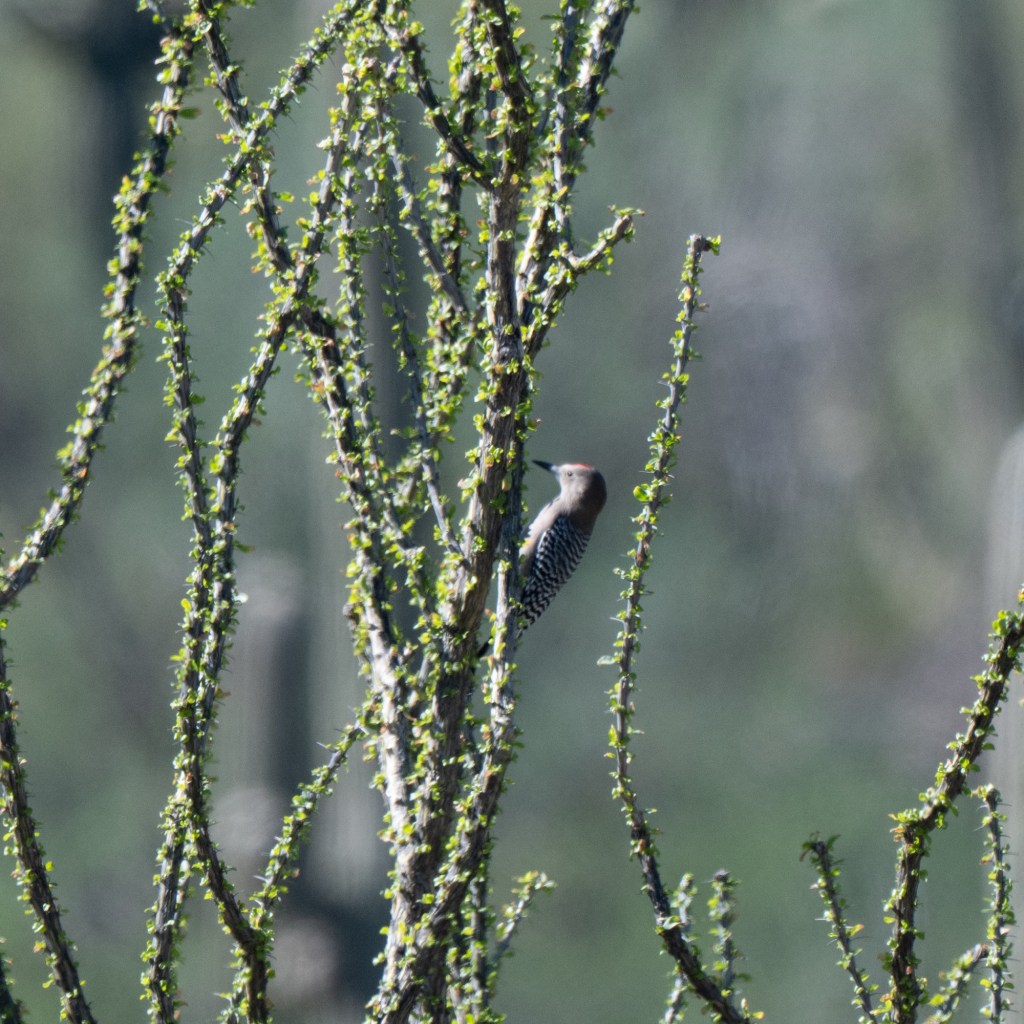
Gila Woodpecker (Melanerpes uropygialis) – Common in low-elevation deserts, especially where saguaro cacti grow. These woodpeckers eat a wide variety of insects, as well as cactus fruit, berries, seeds, and sometimes small lizards or bird eggs.
Ladder-backed Woodpecker
I found this one at the Sonny Bono National Wildlife Refuge, where I had gone looking for waterfowl. I saw neither water nor fowl. The area was dry, overrun with biting flies and mosquitoes, and smelled a bit off. Just as I was about to get back in my car, I spotted a single woodpecker. I’m still treating the bites.
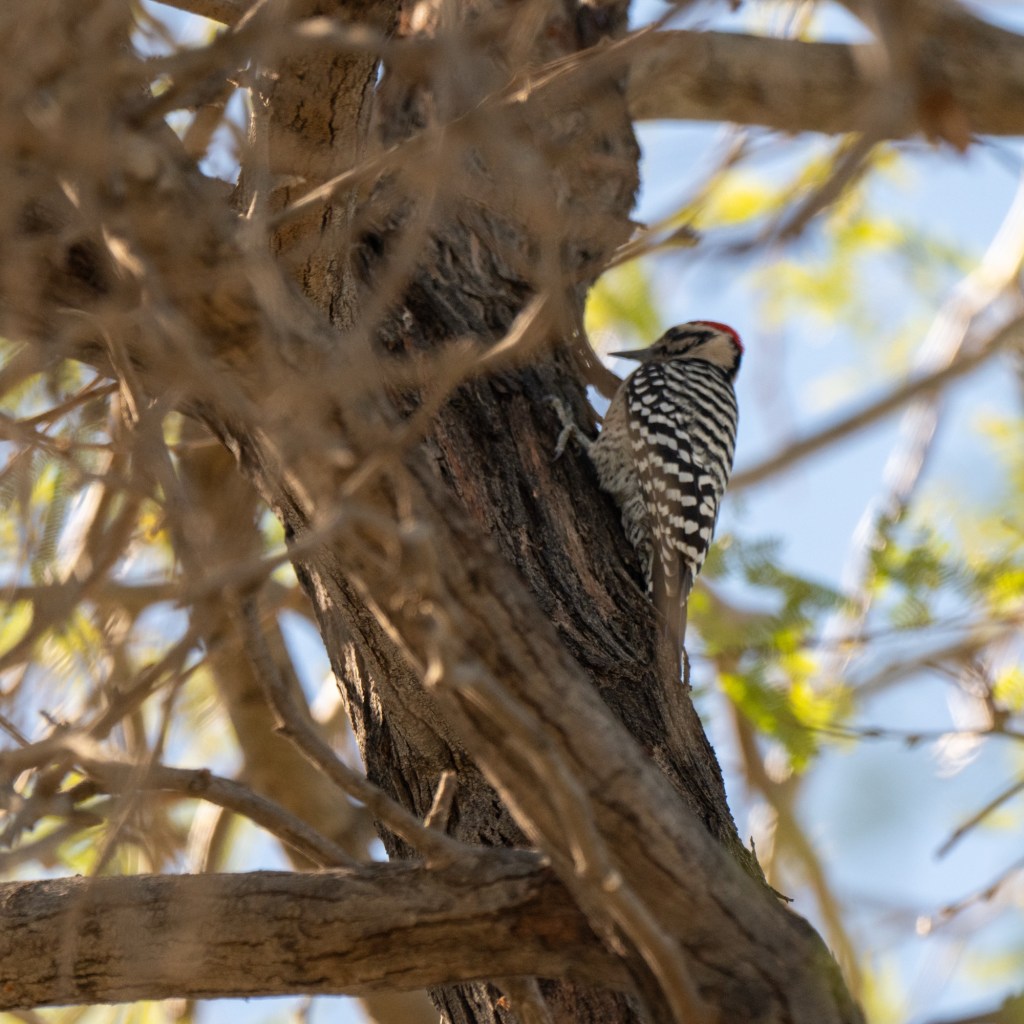
Ladder-backed Woodpecker (Picoides scalaris) – Common in desert scrub and mesquite habitats. They feed mostly on insects and larvae, but will also eat fruit when available.
Owls
I’ve looked for owls too many times to count. Besides the occasional hoot at a nearby park, I’ve never seen one. There’s still time left in the year, so I have hope. I might ask a guide for help. At this point, I’m not even sure I’ll recognize one if I see it.




 Peanuts In My Pocket
Leave a comment