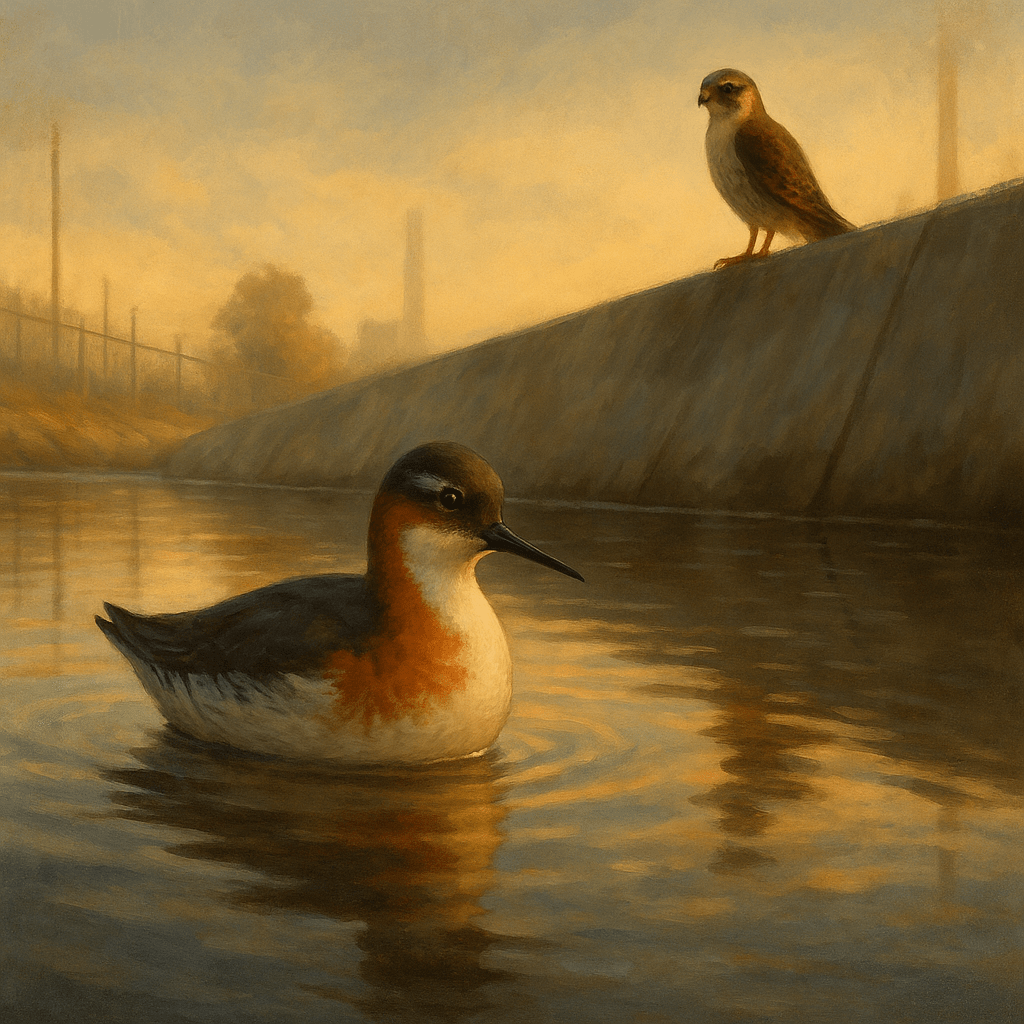
My wife and I visited Ken Malloy Harbor Regional Park in Harbor City on Saturday to do some birding. The park was new to us. My birding brother-in-law Don had recommended it a few months ago. While I usually follow up on his tips, I hesitated with this one. I’d had past experiences here and didn’t consider it an ideal birding spot.
I was wrong. It’s actually a nice park, surprisingly so. But the area around it is questionable. If you like walking in a park next to a functioning oil refinery, this one’s for you.
As we started down the trail that crosses the dam, a freckle-faced young birder, maybe 9 years old, stopped us. He wanted to tell us about a bird he’d seen sitting in the shallows at the end of the dam. He had binoculars in one hand and a bird guide in the other. He and his grandmother were actively identifying species, even using the Merlin Bird ID app for help. But one bird had them stumped. They showed me a photo and asked what I thought. I guessed Spotted Sandpiper.
I was wrong again. It turned out to be a female Red-necked Phalarope, a bird I’d never encountered before.
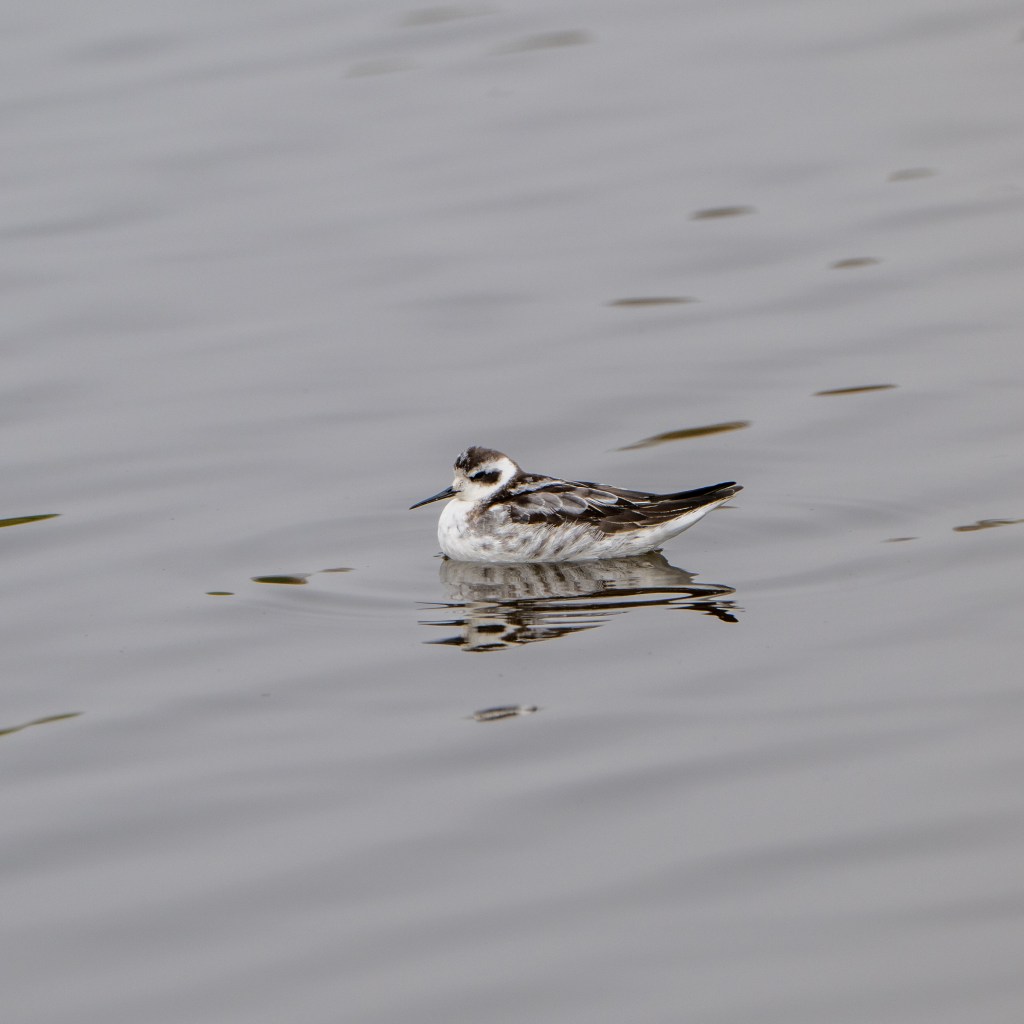
I kept an eye out for it as we walked and eventually flushed it from a small pond on the downstream side of the dam. It flew a few feet, then landed in the water just 15 feet away. Oddly, it didn’t flee farther. It just sat there. I thought its behavior seemed off. It looked a little lost or out of place, not foraging like it should have been. I took a few photos for ID purposes but held off adding it to my checklist until I could confirm.
After processing the photos and checking the Shipley guide along with three AI sources, I was confident I had a new species: a Red-necked Phalarope (Phalaropus lobatus). These small shorebirds forage by picking insect larvae from the water’s surface. But this one wasn’t feeding at all. Something seemed wrong.
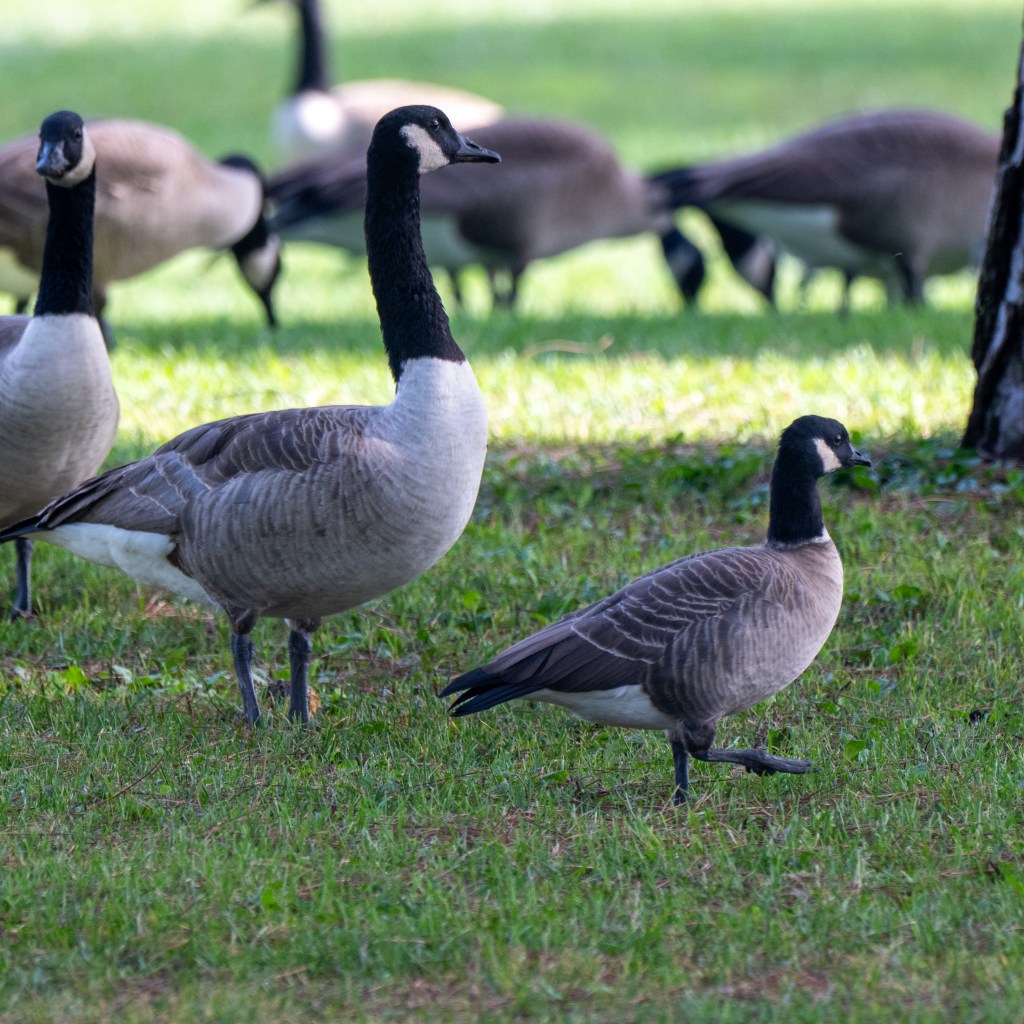
I posted my eBird checklist, which also included two other new species: a Cackling Goose and a Bonaparte’s Gull. The next day, I checked to see who else had logged sightings, hoping the young birder or his grandmother might have submitted a list.
Instead, I found an entry from an accomplished birder named Chezy. She had also spotted the Phalarope and noted its odd behavior. Her post included something more: a photo of an American Kestrel eating that same bird. She had actually witnessed the attack and followed the kestrel to get a striking photo.
It was a gut punch. I had just added the Red-necked Phalarope to my life list, and the next day it was food.
We often forget the circle-of-life reality that surrounds birding. Learning that my latest “lifer” had been killed and eaten stung, but I get it. That’s the wild. Just a few weeks ago, I learned that the same bird sanctuary providing safe haven to migrating waterfowl also allows duck hunting. I had even used a hunting blind to observe birds without realizing its intended purpose.
Life is rough for birds. We humans don’t make it any easier. And then they still have to dodge kestrels and murder hawks.
Notes
- My Life List: 198 species
- Bird Nerd Project: 162 species



 Peanuts In My Pocket
Leave a comment