The photographic work of Walker Evans has always inspired me. His focus on storefront signs, functional design, and everyday people going about their lives led me to explore similar subjects in my own work. I used to think of his photographs primarily as documentary work and, of course, fine art. Evans reminded me that an artist can apply their skills to the ordinary. That idea has stayed with me and is something I’ve been trying to do for most of my life.
For a long time, I didn’t have a name for this desire to photograph the ordinary, or in my case, the ordinary and sometimes ugly world we live in. To me, beauty often stands out against the banality of everyday life. When I encounter it, I can’t look away. It’s rarely a rose that catches my eye, though. It’s more likely the neglected planter sitting beside a building. I didn’t have language for this instinct until I watched a video by a YouTube channel I follow called Photography as Meditation, run by photographer Chris Brogan. In a recent video titled Photographing Ordinary Things – Vernacular Photography, he introduced me to the term vernacular photography.
In simple terms, vernacular photography refers to the everyday photographs people take to record their lives rather than to create art. Family snapshots, vacation photos, school portraits, and pictures taken simply to remember a moment or document something. These images are often imperfect, casual, and unplanned. Over time, they gain power because they show how people actually lived, what they cared about, and what ordinary life looked like in different eras.
In the hands of a skilled photographer, vernacular photography can rise to the level of fine art, as seen in the work of Walker Evans. It can also resonate with smaller audiences through platforms like Instagram or take the form of a photobook. That’s where I currently sit, mostly sharing work on Instagram, though I’ve started curating images with a future photobook in mind. Maybe I’ll land there eventually.
Yesterday, while having breakfast with my son, I saw something I wanted to photograph. To be honest, I saw several things I wanted to shoot, but if I followed every impulse, we would have skipped breakfast altogether. I waited, then drove to a spot where I could take the photo. My son asked what I was doing, and then I could see he understood. I was doing that thing I do, pointing my camera at something no one else seems interested in. The resulting image is shown below.
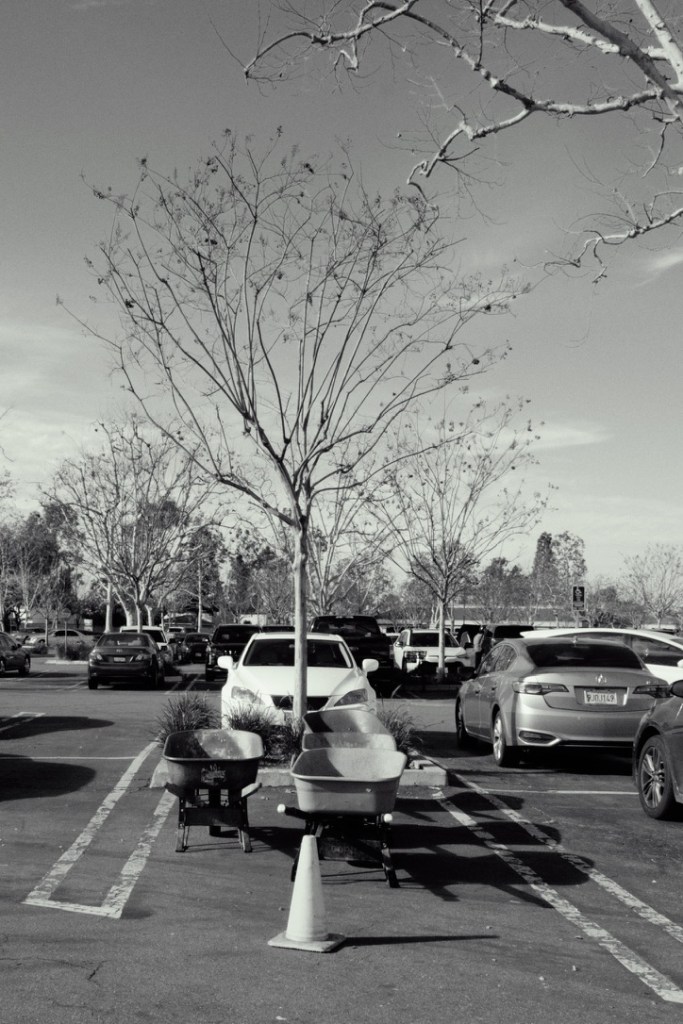
I took the photo with my Fujifilm X-Pro3, which I carry with me most days now that I’m retired and have more time. The photo didn’t quite land for me. I failed to capture what I saw in my head. I should have pulled over, gotten out of the car, and taken the time to frame it properly. I consider it practice and something to build on. I have a lot of photos like this. I’m not sure anyone else will ever see them. I make them for myself.
I think often about the rediscovered work of Vivian Maier. She spent her life making photographs for herself, with no audience in mind. We are lucky to see her images now, discovered after her death. Her dedication and perseverance were anything but ordinary, yet her legacy is just that. Ordinary life, presented as art. That alone continues to inspire me.

 Peanuts In My Pocket
Leave a comment