I am a person who enjoys being alone. So is my wife. We refer to our time together as “being alone together.” I think it’s one reason we’ve been together successfully for so long. This extends to our dining habits. We often go out for dinner at our favorite places and don’t talk much at all, especially after the food arrives. The idea of social dining doesn’t really enter our thoughts unless we’re eating with friends. When we do talk, it’s often about technology’s encroachment on our dining experience. To be honest, I’m a skeptical fan.
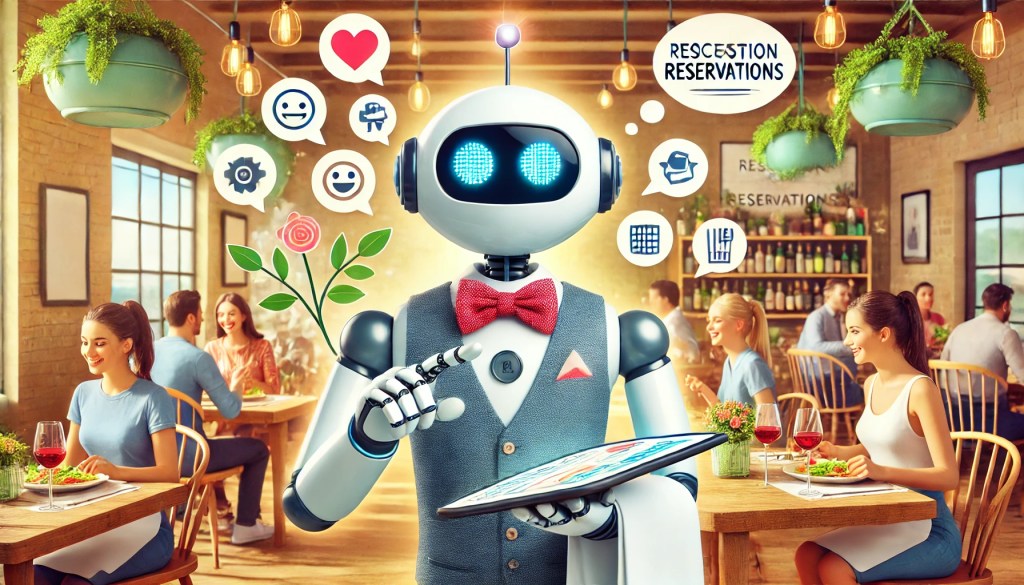
I don’t mind the robots. One place I enjoy, Blooming in Cerritos, has two. The fear is that it allows the restaurant owner to cut back on human staff, but I have not noticed it. It’s a bit of a novelty, but these bots handle busy work like bringing new setups and delivering meal options. I still see my server to order and throughout the meal as they check on us. The robots seem to augment the team and reduce the stress on the human staff.
Other tech comes and goes, some of it good, some of it not so good. I love cashless payment systems that allow you to pay and tip from your mobile phone, although I’m still uneasy about getting up and walking out without a connection to my server. On the other hand, I dislike using my mobile to scan a QR code for a menu. I’d prefer to talk to my server and look at a menu. Preferences aside, there is a huge opportunity for interface design improvements on menus. Most are awful.
I’ve used online services for making reservations for what seems like a long time now. I know it dates back to well before the pandemic. I can’t remember the last time I called for a reservation. OpenTable works well in this tech space, but I’ve noticed something odd. I am starting to get emails pushing prime reservation spots at a few high-end restaurants. One came in for a nice steakhouse just recently. It was 7:30 on a Friday night. I was curious and checked online; the place was booked solid.
I know of TableOne, a New York-focused startup aimed at notifying its users of reservation slot availability at prime restaurant locations. I’m not sure how it makes its money, but this kind of tech is horrifying. It’s already hard to get a reservation at a prime spot, but now I need to compete with an app that notifies my competition?
In addition to TableOne, it appears that somebody had the bright idea to use bots to start email and text campaigns focused on selling or pimping open reservation slots. Pete Wells wrote about it this morning in the New York Times:
It’s so much more convenient that we’ve hardly noticed that reservations, once a simple agreement between you and the restaurant, are now a commodity that other people can profit from. We’re used to getting beat out in the race for tables by bots, which can turn around and sell the spot to the highest bidder.
Reservations are being scooped up by scalpers and sold to prospective diners now? I don’t like this one bit. I already almost stopped going to sporting events and concerts due to unscrupulous scalpers. Now they are coming after my favorite taco shop? Wait… they are not coming after my favorite taco shop, but they are coming after those high-end spots that I occasionally enjoy. I still hate them.
Restaurants are fighting back. One strategy is a hefty prepayment. I read of one trendy place in New York charging $50 per head at the time you make the reservation. Apparently, bots don’t like to prepay. I don’t either. My assessment: technology is coming for our jobs, but it’s also coming for our experiences.




 Peanuts In My Pocket
Leave a comment