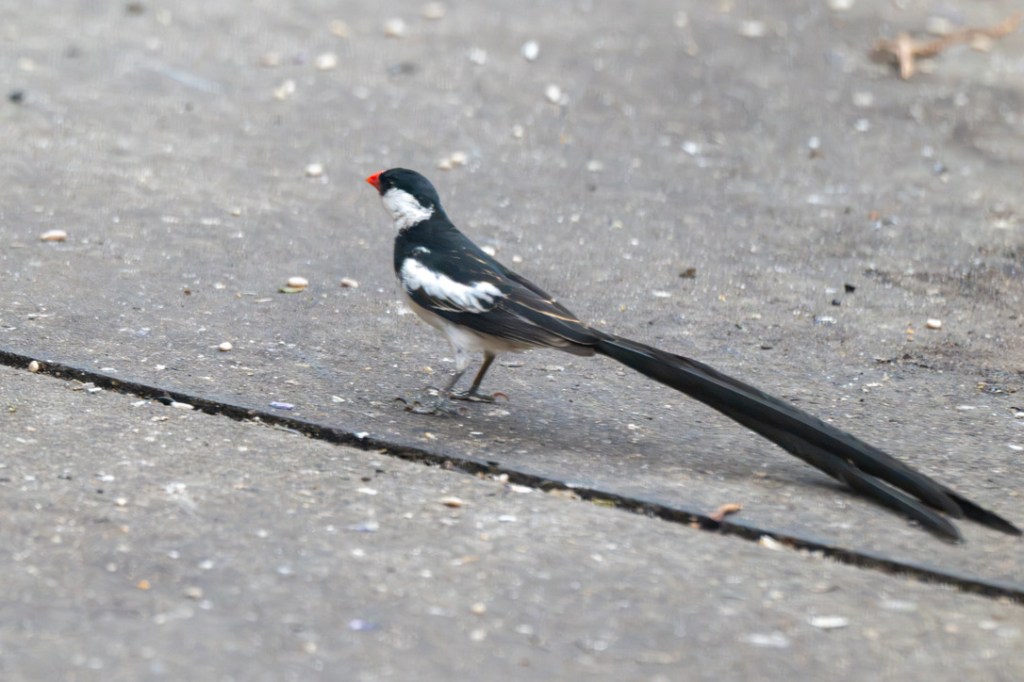
On a recent birding outing at Huntington Beach Central Park, I was photographing a sparrow when, to my surprise, a pin-tailed whydah (Vidua macroura) suddenly appeared in the frame, and posed for me. It was a moment of pure magic and beauty. I usually work hard to find new birds; they rarely land perfectly in front of me, in focus and with good lighting. But that’s the magic. And the beauty? This bird is absolutely stunning. What more could you want?

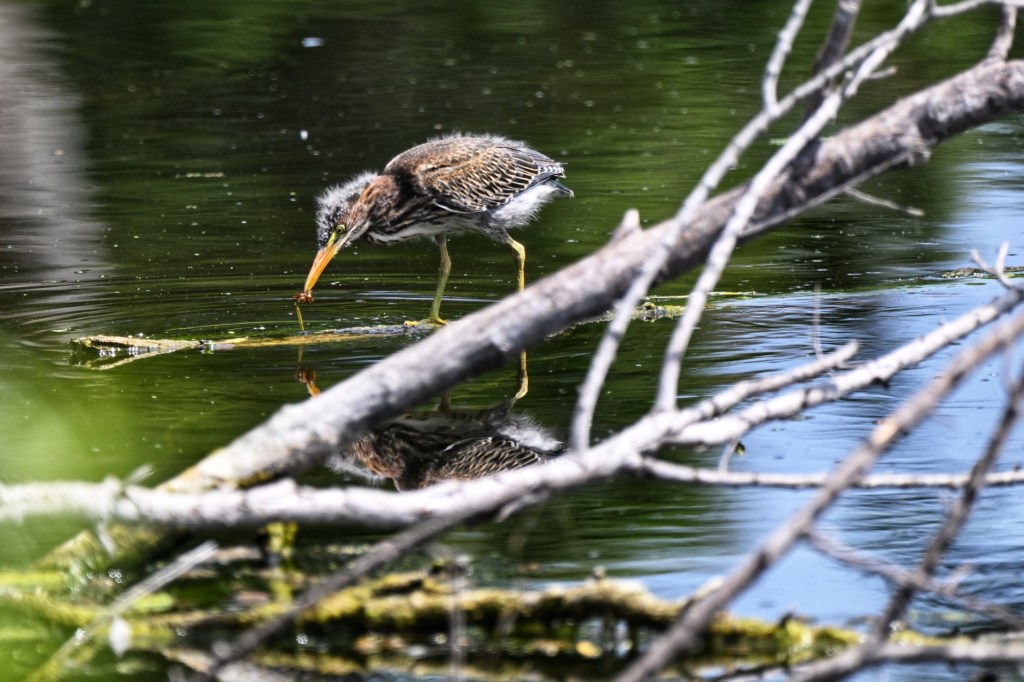
I’ve seen this bird in my yard years ago, but never since. It’s an uncommon sight for most of us, and it made my entire birding day—along with spotting the green heron chicks and a Nuttall’s woodpecker.
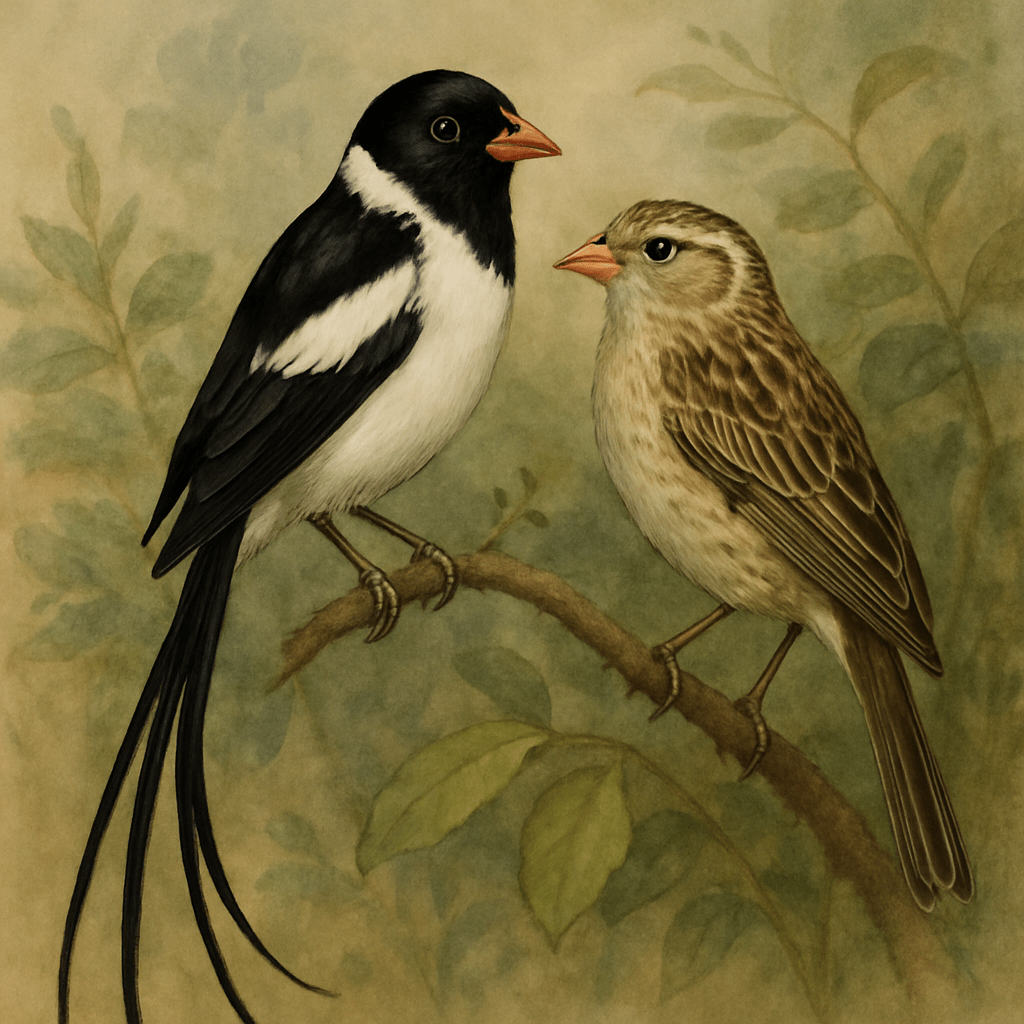
The pin-tailed whydah is a small bird, easily recognized by its unique appearance. During the breeding season, which happens to be now, the male showcases an impressively long tail, often more than twice the length of its body, that makes it stand out in its environment. This tail isn’t just for show; it’s used to attract females. It works too: this one had a female nearby, but she was camera-shy.
The male’s body is mostly black with a white belly, complemented by a bright red beak that enhances its eye-catching look. Female whydahs, and males outside of the breeding season, are less flashy, with more subdued colors that blend into their surroundings.
Pin-tailed whydahs often lay their eggs in the nests of other bird species, leaving the unsuspecting hosts to raise their young. The term for this behavior is brood parasitism, and it’s as bad as it sounds. I tend to think of these birds as beautiful little jerks.
I’ve never seen one at my feeders, though I’ve come across social media posts from fellow birders who have several visiting. They are primarily seed-eaters, favoring small grass seeds (like millet and other grains) as well as seeds from various weeds and cultivated plants.
Have you ever seen one of these birds? If so, please leave a comment below and tell me about it.



 Peanuts In My Pocket
Leave a comment